
The battle over free speech on college campuses reached a constitutional boiling point in AAUP v. Rubio: on September 30, 2025, Judge William G. Young, a federal judge in Massachusetts, ruled that the Trump administration had violated the First Amendment by arresting, detaining, and deporting noncitizen students and faculty members who had participated in pro-Palestinian advocacy. Universities have long served as crucibles for deliberation, critical inquiry, and the contestation of ideas. Yet, in recent years, tensions surrounding free speech on university campuses have intensified, revealing an increasing divide between the principles of expressive freedom and the desires for inclusion, safety, and institutional reputation.
The First Amendment to the U.S. Constitution protects freedom of speech from governmental abridgment. For public universities, this means that campus policies must comport with constitutional standards, and the Supreme Court has set a precedent for protecting speech in educational settings. In Tinker v. Des Moines (1969), the Court ruled that students do not “shed their constitutional rights to freedom of speech or expression at the schoolhouse gate.” In Healy v. James (1972), the Supreme Court affirmed that “state colleges and universities are not enclaves immune from the sweep of the First Amendment.” In particular, the Court referred to college environments as a “marketplace of ideas.” These cases highlight that public university students retain their First Amendment rights on campus, with the Court reinforcing that campuses are meant to be open spaces for free expression and the exchange of ideas.
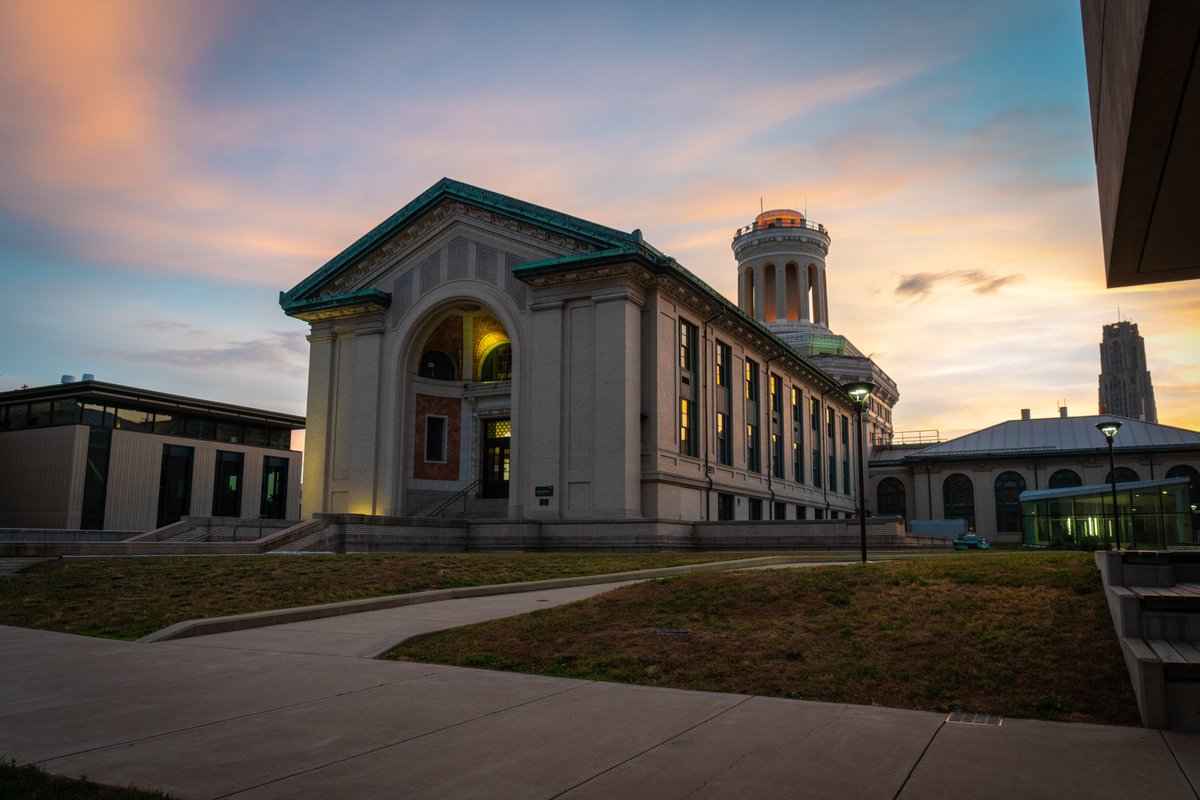
Whereas public institutions are bound by the First Amendment, private institutions are not government entities and thus not directly subject to the First Amendment. Nevertheless, many private institutions commit themselves to principles of academic freedom through institutional policies. For example, Carnegie Mellon University adopted its Policy on Freedom of Expression in 1988, and the policy protects the expression of unpopular and challenging opinions. However, the policy does restrict speech that would not be protected by the First Amendment if Carnegie Mellon was a public institution. Courts have occasionally treated these commitments as binding under contract law, as in Tedeschi v. Wagner College (1981), where a private university was held to its published procedures regarding student discipline.
Despite this, crackdowns on college campuses have become increasingly common, generating controversy over institutional commitments to free speech. Protests at Columbia University involved encampments and the occupation of halls, leading to police involvement and the expulsion of student protesters. President Biden during his term denounced chaos and antisemitism on college campuses, and following his reelection, President Trump has used financial incentives to get universities to comply. President Trump threatened to cut more than $400 million in federal grants to Columbia, citing the university’s failure to prevent antisemitism. Many college free speech controversies have stemmed from the Trump administration’s claims of antisemitism and indoctrination taking place on campuses, resulting in federal funding cuts. Many universities, including Columbia, Brown, Cornell, the University of Pennsylvania, and the University of Virginia have struck deals with the Trump administration and agreed to pay millions of dollars in order to restore federal funds.
Even without direct threats of federal funding cuts, universities have censored messages, leading to controversy and confusion surrounding free speech policies. At Carnegie Mellon University, controversy surrounding free speech was generated when university officials painted over the Fence, a structure on campus that has been traditionally painted by the student body to share messages, information, and opinions, during President Trump’s visit to the university in July 2025. The night before President Trump’s arrival, students had painted the words “No Rapists on our Campus” on the Fence, but members of CMU’s staff painted over these words on the day of the event.
Universities are both bastions of free inquiry and communities governed by norms of mutual respect and nondiscrimination. The tension between these dual commitments has become increasingly visible in recent years as universities struggle to strike a balance. Recently, campuses have faced increasing challenges over how to respond to hate speech, which speakers should or should not be invited, and to what degree student activism should be restricted.
The defense of free speech rests on the belief that open contestation must be fully protected. Universities generally promote free expression and foster environments where dissenting views are not merely tolerated but encouraged.
However, critics argue that absolutist speech doctrines overlook the social realities of power, identity, and harm. They contend that hate speech can undermine equality and dignity, thereby eroding the very conditions necessary for meaningful participation in civil discourse.
Thus, universities must structure institutional norms that honor both free expression and inclusion. In order to safeguard free expression on college campuses, numerous policy recommendations have been made:
- Institutions must make a clear affirmative commitment to free expression. In particular, institutions should codify policies in favor of open expression, but such policies must be construed in ways that are clear to students, faculty, and university administration so that little controversy can arise.
- Institutions may regulate speech to maintain educational effectiveness, consistent with Hazelwood School District v. Kuhlmeier (1988) principles adapted to higher education. In particular, speech that would not otherwise be protected by the First Amendment of the United States may be subject to university regulation.
- Institutions must guarantee procedural fairness and transparency to community members. All speech-related disciplinary processes should provide notice, neutrality, and appeal mechanisms codified in clear and accessible university policies in order to protect both expressive rights and community standards.
These recommendations will strike a balance between free expression and the needs for regulation.
Free speech on university campuses is not a zero-sum contest between liberty and regulation. The survival of a democratic society depends on institutions that can host the clash of ideas without collapsing under it, and universities must do their part to provide safe forums for student expression without collapsing from internal division.
• • •
Leo Yang is a junior, studying Business Administration as well as Statistics and Data Science with a minor in American Politics and Law. He is also involved with the Economics Club, Tartan Newspaper, and other student organizations.


Leave a Reply