
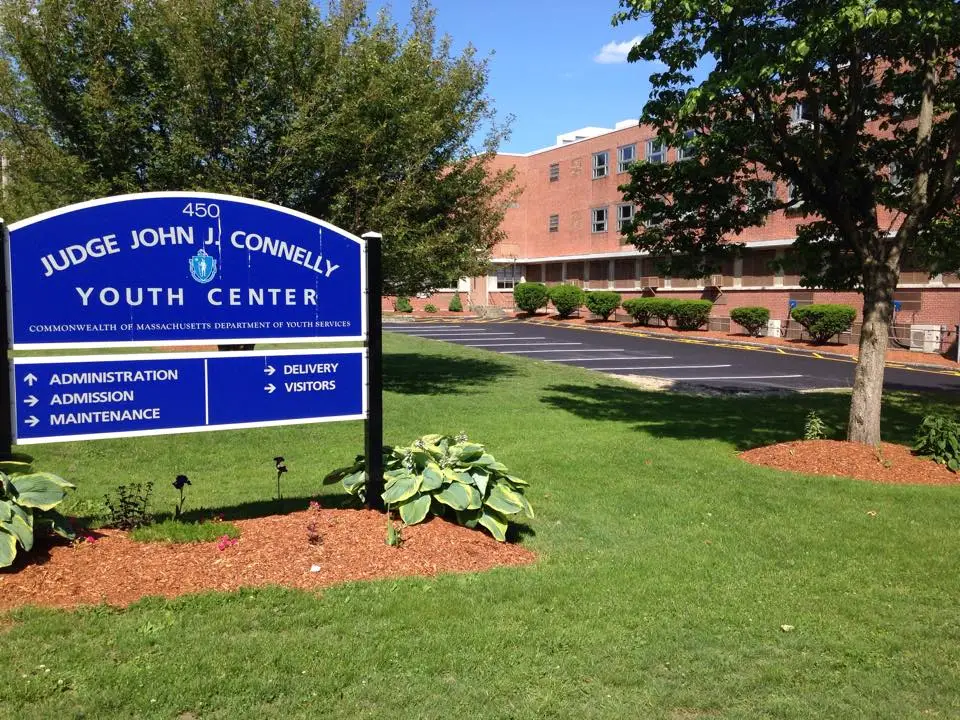
Photo by Sarah Betancourt.
At what age is an individual considered a full adult? Legally, it’s often at age eighteen, a milestone that grants individuals the right to vote, to sign their own legal documents, and to enlist in the military, just to name a few. But many restrictions remain. Eighteen-year-olds cannot purchase alcohol or use tobacco, for example. In most places, they cannot rent a car either. Young people must wait until age twenty-one to do so. And yet, the criminal justice system, specifically that in Massachusetts, automatically considers eighteen- to twenty-year-olds a part of the adult penal system. This cutoff not only hurts the individuals directly impacted by the system but the Commonwealth as a whole. So why do we have this inconsistency between the age of complete adulthood and treatment in a court of law? Why is our criminal justice system not doing everything possible to lower crime and create a better future for Massachusetts?
Increasing the age at which individuals are a part of the adult justice system is not a new idea. In fact, twelve years ago, Massachusetts raised the age of juvenile court jurisdiction to prevent seventeen-year-olds from entering the adult system when Governor Deval Patrick signed An Act Expanding Juvenile Jurisdiction into law. This reform brought Massachusetts to the level of thirty-nine other states who had already implemented similar laws and finally conformed to the more common threshold of adulthood, eighteen. Why should someone who is not yet old enough to vote be tried as an adult?
Beyond repairing the illogical discrepancy between popular assumption of adulthood and the courts’ view of adulthood, this shift prevented the need to make costly changes in adult facilities in order to comply with the federal Prison Rape Elimination Act (PREA). PREA requires courts and facilities to offer physical separation between adults and juveniles to prevent underage incarcerated individuals from possible rape and sexual assault in the justice system. Continuing to treat seventeen-year-olds as adults would require costly construction and staffing changes to the facilities. This progress is meaningful, yet stopping here would mean accepting a flawed system. Further action is essential to improve incarceration in the United States.
Making a change to treat seventeen-year-olds as part of the juvenile justice system is not a means to deny these individuals accountability for their actions. In fact, since Massachusetts raised the age from seventeen to eighteen, the Department of Youth Services (DYS), the agency charged with operating the juvenile justice services in the state, has developed programming for older teens to hold them accountable while also setting them up for productive and healthy lives. DYS has been clear about the long term positive impact that changing the age of juvenile jurisdiction can have on long term public safety. Providing seventeen-year-olds with the services such as developmentally appropriate counseling and educational pathways supports them as they move into adulthood. It also allows these young people to better develop important skills to contribute to their local communities, such as preparation to hold a job. It works towards establishing a more rehabilitative system instead of a solely punitive system. It creates a better society.
These positive impacts are clear in the data as well and offer reasonable belief that raising the age to twenty-one offers potential for further progress. Since this law was put in place, many changes have occurred:
- Juvenile arrests in Massachusetts have dropped by twenty-three percent.
- The arrest rates of eighteen- to twenty-year-olds have decreased by seventy-three percent.
- The overall number of cases in the juvenile court system has declined steadily, even with the cases added due to the older age of juvenile jurisdiction, as of 2020.
- The juvenile court system saw a fifteen percent average annual decrease in arraignments, or in other words, initial court appearances where individuals are read the criminal charges against them, since 2009.
Using estimates for arraignments from fiscal year 2015, which are likely overestimates, if eighteen- and nineteen-year-olds were added to the juvenile justice system, then the projected total juvenile arraignments would be less than the total juvenile arraignments in the year prior, 2014.
While understanding the fiscal evidence behind this reform is still important, it is similarly valuable to examine individuals holistically and developmentally. Young adults, ages eighteen to twenty-four, have particular developmental differences from older adults. They are more likely to be more impulsive, unstable, less future-oriented, and more often influenced by peers. While competence does vary amongst individuals, a generalization would find that teens are surprisingly effective at making decisions when accounting for the challenge level of the decisions at hand. Adolescents’ decision making capabilities require nuanced analysis with specific aspects to note including their decreased value of future outcomes, overestimation of the risk of dying, and reduced emotional control. Right now, young adults spend 10% to 20% more time incarcerated in houses of correction than any other age group. This demographic is also more likely to reoffend but is particularly responsive to rehabilitative programming. In the current system, 76% of adolescents are re-arraigned within three years, the highest rate in the adult system.
Spending time in harsh settings such as adult prisons can increase offending while continuing to attend school, completion of vocational training, and participation in rehabilitative programming, options that are part of the juvenile justice system, will work to lower the reoffending rates, also called recidivism rates. According to CDC research, the recidivism rate for similar young adults dropped by 34% when individuals were in the juvenile system instead of the adult system. For formerly incarcerated young people in Massachusetts, the recidivism rate is lower for those who were in the Department of Youth Services (26%) versus those who were in the adult system (55%).
With such strong outcomes and supporting reasons, raising the age of juvenile court jurisdiction even further to include eighteen- to twenty-year-olds is the only logical next step. The process of implementing this policy change would be gradual with a five-year implementation period. After these five years, across the Commonwealth, an individual would be treated as an adult in the criminal justice system at age twenty-one. Keeping eighteen- to twenty-year-olds in the juvenile system would allow them to access important services to help them develop appropriately while still holding them accountable. Those charged with serious offenses, such as murder, would still be able to receive adult sentences, as is the current law for children fourteen and older.
Criminal justice reform does more than just lower crime and create positive rehabilitative outcomes. This system reflects a long history of inequality, racism, and racial violence in policing and the American prison system. Including eighteen- to twenty-year-olds in the adult criminal justice system disproportionately affects young men of color in Massachusetts. Although twenty-five percent of the young adults in the Commonwealth are Black or Latino, seventy percent of young adults in state prisons and fifty-seven percent in county jails are individuals of color.
Raising the age of juvenile court jurisdiction would therefore work to create a more equitable and fairer Massachusetts while also lowering crime and improving public safety. President and CEO at the Black Economic Council of Massachusetts, Nicole Obi, affirmed this positive impact, “Considering the Commonwealth’s aging labor market and the overrepresentation of Black and Brown adolescents in the criminal justice system, the passing of [a bill to raise the age of juvenile jurisdiction to include eighteen- to twenty-year-olds] will immediately increase the participation of young people, particularly young people of color, in the workforce, helping them to build a better future while contributing to a more robust, productive, and diverse Massachusetts economy.”
Reforming the criminal justice system in this way will not only decrease crime but also hold young people accountable while improving the current approach to criminal justice, benefiting the economy, and working to establish a more just Commonwealth. This issue has been considered in the past three legislative sessions but has never become law. That needs to change. Waiting is not the answer. Massachusetts needs this change. Raise the age.
• • •
Aleksaundra Handrinos is a senior, studying Ethics, History & Public Policy as well as International Relations & Political Science. She is involved with Carnegie Mellon’s Pre-Law Society, Alexander Hamilton Society, and research on campus.



Leave a Reply